
Why Mastercard’s BVNK acquisition is a strategic shift
Mastercard’s deal to acquire BVNK for up to $1.8 billion goes beyond simply entering the crypto space. It reflects a well-thought-out strategic redirection.
Rather than introducing its own stablecoin, Mastercard has opted to gain control of the underlying infrastructure that links conventional finance to blockchain-enabled payments.
This approach prompts an important question: Why would a major player in payments decide against creating its own digital currency and instead invest in the systems that facilitate its movement?
The explanation centers on regulatory considerations, the ability to scale and sustained influence over the core infrastructure of digital finance.
What BVNK brings to the table
BVNK does not issue stablecoins and operates as a payments infrastructure provider. Robust infrastructure plays an important role in the functioning of the stablecoin ecosystem.
It allows businesses to:
-
Send and receive payments with stablecoins
-
Perform smooth conversions between fiat currencies and crypto
-
Operate in more than 130 countries
As a result, BVNK serves as a connector between two distinct financial ecosystems:
-
Conventional payment networks, including banks, card networks and fiat channels
-
Blockchain networks, including stablecoins, crypto wallets and on-chain transactions
Instead of developing a new form of currency, BVNK helps businesses utilize the ones already available with greater efficiency.
Did you know? Stablecoins process trillions of dollars in annual transaction volume and often rival major card networks. Yet many users do not realize they are interacting with blockchain-based systems behind the scenes when using certain fintech payment services.
Objective of Mastercard: Connecting financial networks
Mastercard serves as a connector of financial networks, functioning as a network of networks. Rather than trying to compete with different forms of digital money, Mastercard aims to play the role of an integrator that links them all seamlessly.
This approach involves bringing together:
-
Traditional card-based payment systems
-
Core banking infrastructure
-
Blockchain-based transaction rails
According to company leadership, the future payments landscape is expected to feature an array of digital money forms, such as:
Why Mastercard has chosen not to issue its own stablecoin
On the surface, creating a stablecoin issued by Mastercard might appear to be a natural step. However, there are compelling reasons the company has decided against it:
Stringent regulatory compliance
Stablecoin issuers are encountering growing regulatory pressure. Emerging frameworks, such as the GENIUS Act (Guiding and Establishing National Innovation for US Stablecoins), are designed to enforce:
-
Strict reserve requirements
-
Enhanced transparency obligations
-
Oversight similar to that applied to traditional banks
By issuing a stablecoin, Mastercard would effectively become a regulated financial issuer, which would introduce substantial operational and compliance complexity.
Risks tied to the balance sheet
Enterprises that issue stablecoins are required to hold reserves, typically in cash or government securities, to fully back the tokens in circulation. This creates several challenges, including:
-
Complex liquidity management
-
Potential redemption pressures
-
Vulnerability to shifts in market conditions
By steering clear of issuance, Mastercard avoids taking on these financial risks and obligations.
Preserving harmony with partners
Mastercard maintains close partnerships with:
Introducing its own stablecoin would risk placing Mastercard in direct competition with these key collaborators within its ecosystem. By focusing on infrastructure instead, Mastercard can remain in a neutral position that serves rather than challenges its partners.
Did you know? The concept of “tokenized deposits” is gaining traction among banks, where traditional money is digitized on a blockchain. However, it remains within regulated banking systems, offering a potential alternative to privately issued stablecoins.
Infrastructure offers Mastercard more leverage
Controlling infrastructure generally delivers greater power than controlling a single asset. A stablecoin issuer earns profits exclusively from its own token. An infrastructure provider, however, captures value from transactions involving multiple tokens.
This model enables Mastercard to:
-
Support Tether USDt (USDT), USDC (USDC) and emerging bank-issued tokens
-
Generate fees from a broad spectrum of use cases
-
Grow in tandem with the entire ecosystem rather than being limited to one product
With this step, Mastercard is positioning itself to capture value across digital payment flows.
Why timing is critical at this juncture
The acquisition aligns with a surge in institutional interest in stablecoins, which have the potential to fundamentally transform global payments over the coming decade.
Several converging trends reinforce this momentum:
-
Significantly faster and more cost-effective cross-border transactions
-
Growing regulatory clarity
-
Expanding adoption among fintech companies and large enterprises
Stablecoins have moved beyond the experimental phase and are increasingly viewed as foundational elements of financial infrastructure.
Did you know? Cross-border payments through traditional banking can involve up to five intermediaries. Stablecoin-based transfers can reduce this to just two endpoints, dramatically cutting both time and cost.
Where Visa, Coinbase and others fit in
Mastercard faces competition in this space. Visa has made investments in BVNK, while Coinbase previously considered acquiring the company before withdrawing.
This reflects a wider industry convergence:
-
Traditional financial institutions are advancing into blockchain territory
-
Crypto-native companies are seeking deeper integration with established payment networks
Nevertheless, approaches vary and many crypto firms prioritize issuing their own tokens. Major payment networks emphasize infrastructure and broad distribution.
Why infrastructure wins in cross-border payments
Conventional cross-border payments are hampered by delays, often spanning days, high fees and the involvement of numerous intermediaries.
On the other hand, stablecoin-based systems deliver:
By incorporating infrastructure such as BVNK, Mastercard can introduce these benefits into its established network without needing to replace it entirely.
Mastercard’s strategy reduces the barriers to adoption. Banks and fintechs gain the ability to:
-
Provide stablecoin services without developing their own blockchain systems
-
Use global payment rails more efficiently
-
Seamlessly incorporate digital currency features into their current offerings
This approach cements Mastercard’s position as a backend enabler for the future of finance.
Associated risks and open questions
Despite the promise of this infrastructure-focused strategy for Mastercard, meaningful challenges and uncertainties remain that could influence its long-term outcome.
These include:
-
Persistent regulatory differences and fragmentation across jurisdictions, creating compliance hurdles and inconsistent operating environments for cross-border activities
-
Heavy reliance on external stablecoins issued and managed by third parties, which introduces dependency risks related to their stability, governance and continued availability
-
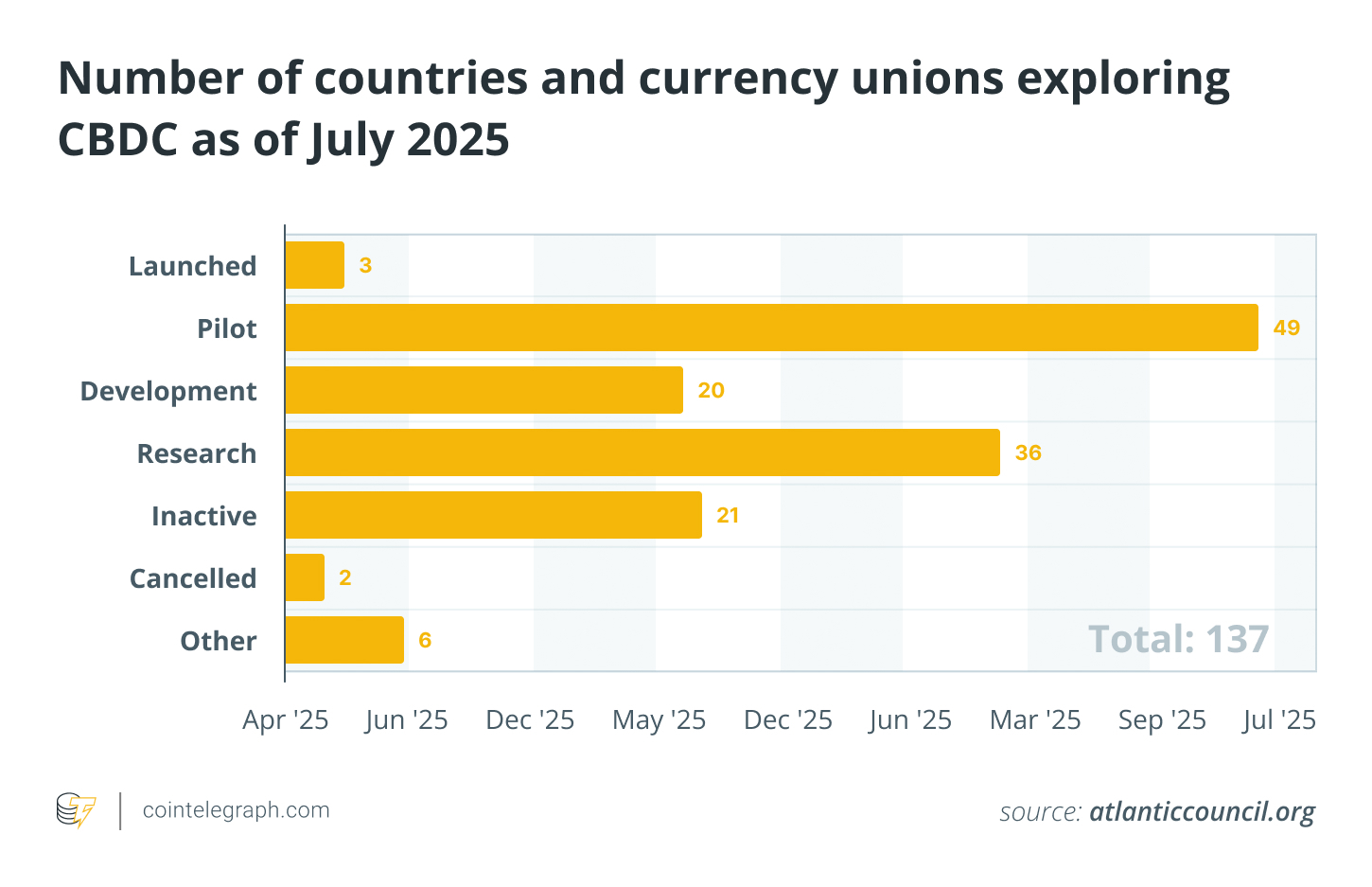
Intensifying competition from CBDCs as well as powerful technology giants entering the payments space with their own solutions and vast user bases
-
Potential margin compression in infrastructure-based services, as increased competition and scale drive fees downward over time
Evolving geopolitical tensions, shifts in monetary policy and unforeseen technological disruptions could further complicate the path forward.
Ultimately, the success and durability of Mastercard’s approach will depend on how the broader stablecoin ecosystem continues to develop and mature.
Go to Source to See Full Article
Author: Dilip Kumar Patairya