- Ethereum consolidates near $2,536 as momentum indicators hint at a potential cooldown.
- Whale accumulation grows, but technicals suggest short-term caution despite long-term confidence.
As Ethereum [ETH] continues to evolve, its core challenges around decentralization and infrastructure resilience are coming into sharper focus.
Co-founder Vitalik Buterin has issued a timely warning against over-reliance on centralized RPC services, calling for a transition to stateless nodes to preserve the network’s trustless nature.
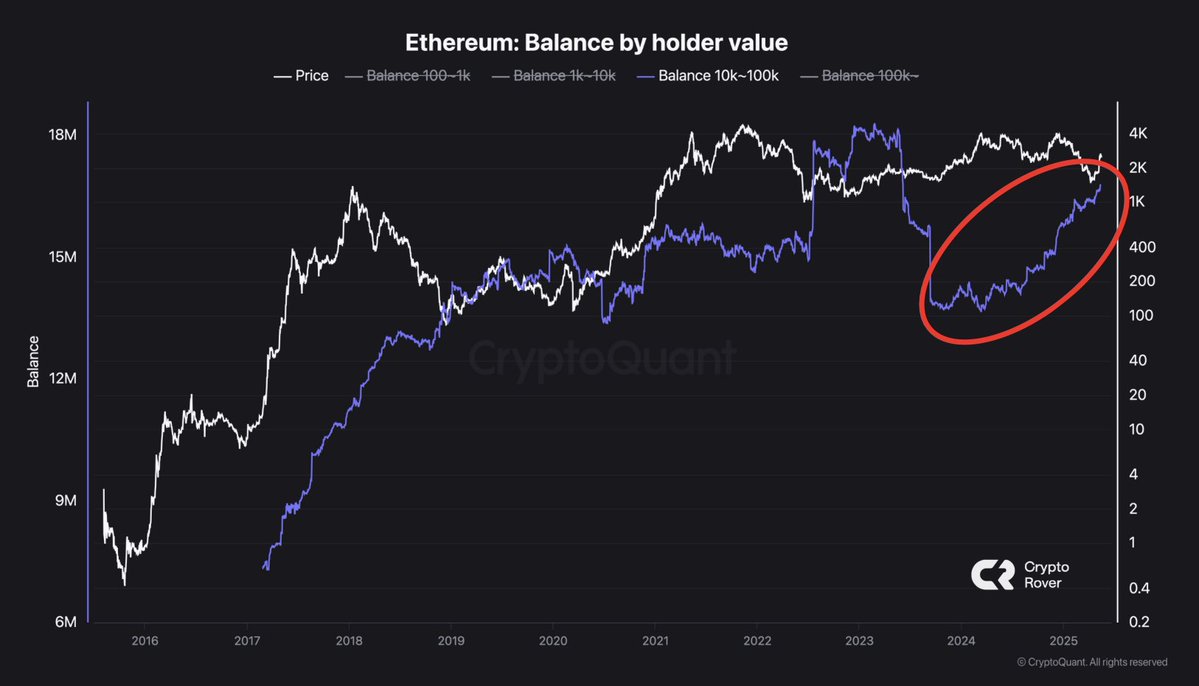
At the same time, on-chain data revealed a surge in accumulation by Ethereum whales holding between 10,000 and 100,000 ETH — an unmistakable signal of growing confidence in the protocol’s long-term trajectory.
Buterin’s push for stateless nodes
Vitalik Buterin is sounding the alarm on Ethereum’s growing reliance on centralized RPC services — third-party gateways that most users depend on to access the network.
While convenient, these services concentrate control in the hands of a few. It also opens the door to censorship, surveillance, and systemic risk.
Buterin argues this trend undermines Ethereum’s foundational ethos of decentralization.
To counter it, he’s advocating for stateless nodes — lightweight clients that don’t require storing the entire blockchain.
The goal is clear: make running a node as accessible as using an app, giving users more control and restoring Ethereum’s decentralized backbone.
Whale confidence grows
While Buterin champions a leaner, more decentralized Ethereum, the network’s largest holders are making bold moves of their own.
On-chain data shows that wallets holding between 10,000 and 100,000 ETH are quietly increasing their stakes — a sign of strong conviction in Ethereum’s long-term value.
Author: Samyukhtha L KM