The conflict between Justin Sun and World Liberty Financial [WLFI] is evolving into a legal challenge for DeFi. In April 2026, Sun alleged that a hidden blacklist function had frozen over $100 million, raising concerns about control.
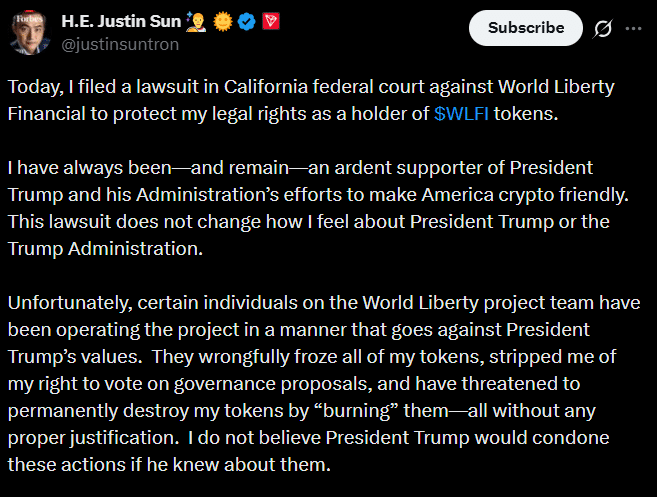
This structure highlights a more profound issue, as protocols favor control and speed over decentralization.
Still, these controls often exist to manage risk and protect liquidity during stress. However, this creates tension because protective tools can also restrict users.
As legal pressure builds, courts may define whether tokens represent ownership or access. This outcome may reshape trust, pricing, and liquidity across markets.
WLFI coercive governance reveals hidden control
The dispute between TRON’s Justin Sun and World Liberty Financial is exposing how control functions shape DeFi governance in practice. Sun pushed back, stating, “Not voting, this is coercion,” which reframes governance as enforced compliance rather than choice.
This followed WLFI’s proposal to restructure over 62.28 billion tokens, where early supporters holding more than $17 billion face a two-year cliff and extended vesting.
As this develops, such forced timelines begin to reshape supply dynamics, as locked tokens reduce immediate sell pressure but increase future overhang risk.
This structure also signals that participation can be altered after entry, which challenges predictability.
Rather than decentralization, control shifts toward those managing vesting and execution, which may push users to reassess governance risk before committing capital.
Go to Source to See Full Article
Author: Muriuki Lazaro