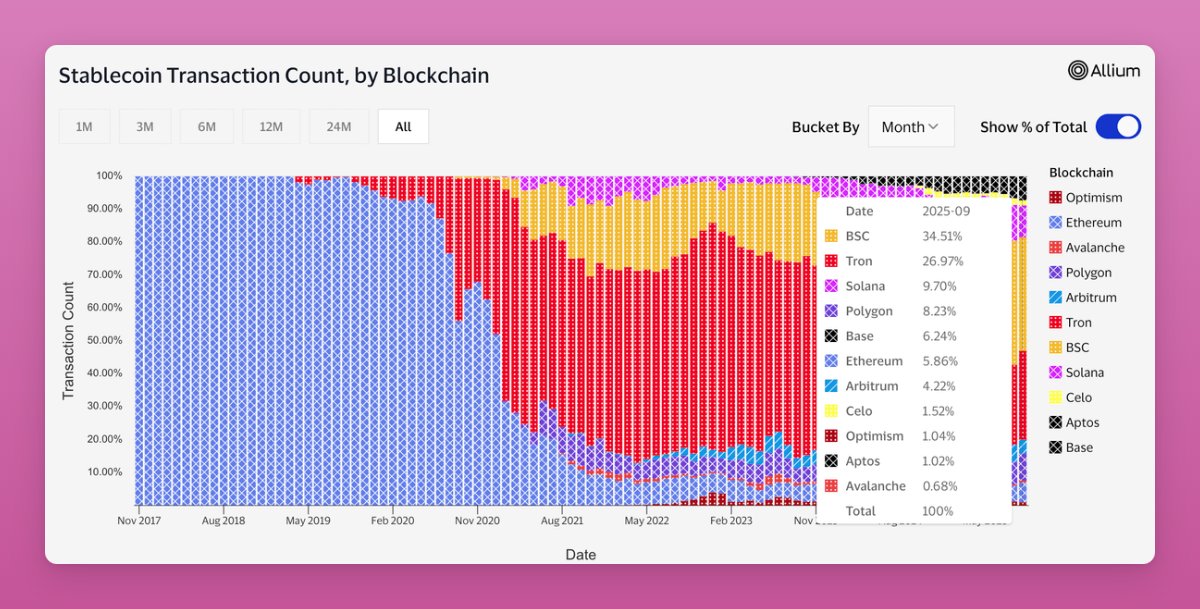
Stripe and Paradigm have launched Tempo, a “payments-first” blockchain designed to optimize stablecoin transactions. This has sparked heated debates about its impact on Ethereum, Solana, and other existing payment-focused chains.
While many experts view this as an opportunity to expand user adoption and strengthen cross-chain infrastructure, others remain skeptical about its claimed “neutrality” and Stripe’s true motives. Tempo could become a significant catalyst for the stablecoin market, but it also risks reshaping the competitive landscape of crypto.
Tempo as Libra v2?
Stripe and Paradigm drew significant market attention by announcing the concept of a payments-first blockchain called Tempo. This announcement immediately triggered discussions around the “payments-first” model — a design that prioritizes stablecoin transfers and payment experiences rather than focusing on multipurpose smart contracts like Ethereum.
On a macro level, a payments-first blockchain provides a direct path for new users (merchants and Stripe’s customer base) to access stablecoins and on-chain payments without necessarily going through multiple bridges or complex Layer-2 (L2) solutions. This could explain why fintech giants often favor Layer-1 (L1) over L2.
Interestingly, many have compared Tempo to Libra, the ill-fated project once spearheaded by Meta (formerly Facebook). However, Tempo might have better odds, as crypto now enjoys greater political and institutional support.
Sponsored
Sp
Go to Source to See Full Article
Author: Linh Bùi