Stansberry Research
What's Next for GLP-1 Drugs?
Before GLP-1 drugs were a headline story, David Cervantes was already on it.
This week, he joins Dan Ferris on Stansberry Investor Hour to unpack the ripple effects across markets and ...the economy.[+] Show More
active
What's Next for GLP-1 Drugs?
Before GLP-1 drugs were a headline story, David Cervantes was already on it.
This week, he joins Dan Ferris on Stansberry Investor Hour to unpack the ripple effects across markets and ...the economy.[+] Show More
active
No Rate Cuts In 2026?
Did the Fed just hit pause on rate cuts?
Here’s what a “no cuts” scenario could mean for markets.
Watch the full episode on our YouTube channel.
Here’s what a “no cuts” scenario could mean for markets.
Watch the full episode on our YouTube channel.
active
Is Private Credit the Next Financial Crisis?
🔔 Gain an instant edge over Wall Street: https://stansberrydigest.com/
In this week’s Stansberry Investor Hour, Dan welcomes macro analyst David Cervantes back to the show. David begins by revisiting one of ...his earliest big calls — the economic impact of GLP-1 weight-loss drugs — and explains how these treatments have moved from niche medical use to a mass-adoption trend with real implications for industries, markets, and long-term growth. He discusses how companies tied to the GLP-1 boom have dramatically outperformed the broader market and why the ripple effects could continue.
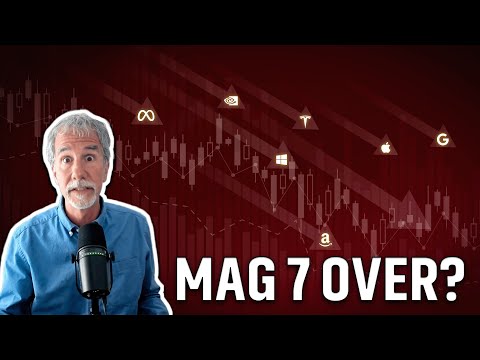
Next, David dives into one of the biggest shifts happening in markets today: the potential rotation away from the “Mag 7” tech trade and toward a broader set of sectors. He explains how massive AI capital spending, changing cash-flow expectations, and improving profit margins in global and industrial businesses are reshaping investor preferences. David argues that leadership is beginning to expand beyond mega-cap technology, with equal-weighted indexes, energy, utilities, and industrial companies showing increasing strength.
The conversation then turns to risks building beneath the surface of the financial system — particularly in private credit markets. David walks through why stress in lower-quality debt could be an early warning signal for the broader cycle and explains how late-cycle dynamics, geopolitical uncertainty, and shifting interest-rate expectations are influencing asset allocation decisions. He also shares his view that inflation pressures tied to inventory restocking and a tighter labor market may limit the Federal Reserve’s ability to cut rates as much as investors expect.
Finally, David discusses structural changes in the investment landscape, including why small-cap stocks may no longer offer the same long-term advantages they once did and how private equity has reshaped public markets. He concludes by outlining where he sees opportunities today — from defense and energy to logistics and industrial suppliers — and explains how productivity gains from AI adoption could gradually lift margins across the broader economy.
0:00 GLP-1 drugs and their impact on markets and industries
12:40 Rotation beyond the Mag 7; sector leadership shifts
19:00 Private credit stress and late-cycle warning signs
28:30 The U.S. dollar, global capital flows, and market positioning
35:30 Why small caps may be structurally disadvantaged
46:30 Restocking trends, inflation risk, and Fed policy outlook
51:40 Trade ideas: defense, energy, logistics, and industrials
01:00:00 Dan’s final thoughts[+] Show More
In this week’s Stansberry Investor Hour, Dan welcomes macro analyst David Cervantes back to the show. David begins by revisiting one of ...his earliest big calls — the economic impact of GLP-1 weight-loss drugs — and explains how these treatments have moved from niche medical use to a mass-adoption trend with real implications for industries, markets, and long-term growth. He discusses how companies tied to the GLP-1 boom have dramatically outperformed the broader market and why the ripple effects could continue.
Next, David dives into one of the biggest shifts happening in markets today: the potential rotation away from the “Mag 7” tech trade and toward a broader set of sectors. He explains how massive AI capital spending, changing cash-flow expectations, and improving profit margins in global and industrial businesses are reshaping investor preferences. David argues that leadership is beginning to expand beyond mega-cap technology, with equal-weighted indexes, energy, utilities, and industrial companies showing increasing strength.
The conversation then turns to risks building beneath the surface of the financial system — particularly in private credit markets. David walks through why stress in lower-quality debt could be an early warning signal for the broader cycle and explains how late-cycle dynamics, geopolitical uncertainty, and shifting interest-rate expectations are influencing asset allocation decisions. He also shares his view that inflation pressures tied to inventory restocking and a tighter labor market may limit the Federal Reserve’s ability to cut rates as much as investors expect.
Finally, David discusses structural changes in the investment landscape, including why small-cap stocks may no longer offer the same long-term advantages they once did and how private equity has reshaped public markets. He concludes by outlining where he sees opportunities today — from defense and energy to logistics and industrial suppliers — and explains how productivity gains from AI adoption could gradually lift margins across the broader economy.
0:00 GLP-1 drugs and their impact on markets and industries
12:40 Rotation beyond the Mag 7; sector leadership shifts
19:00 Private credit stress and late-cycle warning signs
28:30 The U.S. dollar, global capital flows, and market positioning
35:30 Why small caps may be structurally disadvantaged
46:30 Restocking trends, inflation risk, and Fed policy outlook
51:40 Trade ideas: defense, energy, logistics, and industrials
01:00:00 Dan’s final thoughts[+] Show More
active
AI Prompt Engineering 101
AI is only as powerful as the prompts you give it.
Most people are doing it wrong.
Cullen Roche shares the key principles for writing better prompts—and getting far better results.
Most people are doing it wrong.
Cullen Roche shares the key principles for writing better prompts—and getting far better results.
active
Here's What Happens If Oil Crosses $120...
What happens if oil hits $120? Start with this: The case for rate cuts weakens—fast. Here’s why higher energy prices could ripple through the entire economy.
active
The AI Job Market in 2026
AI was supposed to trigger massive layoffs.
Instead, we’re seeing something different: Fewer hires. Fewer fires.
Cullen Roche of Discipline Funds breaks down what’s really happening inside companies right now on Stansberry ...Investor Hour.
Full video on our YouTube channel.[+] Show More
Instead, we’re seeing something different: Fewer hires. Fewer fires.
Cullen Roche of Discipline Funds breaks down what’s really happening inside companies right now on Stansberry ...Investor Hour.
Full video on our YouTube channel.[+] Show More
active
The Case for AI Optimism
There’s a lot of fear around AI: Job losses, disruption, uncertainty.
But there’s another side to the story.
Dan Ferris explains why AI could make things cheaper, create new jobs and industries—and ...open the door to massive opportunity.
Full video on our YouTube channel.[+] Show More
But there’s another side to the story.
Dan Ferris explains why AI could make things cheaper, create new jobs and industries—and ...open the door to massive opportunity.
Full video on our YouTube channel.[+] Show More
active
Why AI Gives Small Business an Edge
Will AI widen the gap between big and small companies… or close it?
Cullen Roche of Discipline Funds explains why AI could help smaller businesses scale faster and compete more effectively ...than ever.
Watch the full episode on our YouTube channel.[+] Show More
Cullen Roche of Discipline Funds explains why AI could help smaller businesses scale faster and compete more effectively ...than ever.
Watch the full episode on our YouTube channel.[+] Show More
active
The Market Never Runs Out of Opportunities
“There’s always going to be that next trade.”
Markets change. Opportunities don’t disappear.
active
What $120 Oil Would Mean for the Economy OR Oil Just Spiked — Here’s the Risk Investors Are Ignoring
🔔 Gain an instant edge over Wall Street: https://stansberrydigest.com/
In this week's Stansberry Investor Hour, Dan welcomes Cullen Roche to the show. Cullen is the founder of Discipline Funds, an ETF ...firm focused on helping investors build portfolios based on real-world time horizons rather than short-term market predictions or traditional benchmarks.
Cullen begins by explaining the concept of “defined duration investing” — a framework that encourages investors to match their assets with their expected financial needs over time. Drawing from his experience working with banks after the financial crisis, he describes how institutions carefully manage asset-liability mismatches and why individual investors often unknowingly take on similar risks. He argues that many portfolios are structured inefficiently, with long-term assets being used to fund short-term consumption, creating unnecessary volatility and uncertainty.
Next, Cullen discusses how market-cap-weighted indexes like the S&P 500 can unintentionally increase risk as valuations rise. He explains that when expectations become elevated — particularly in sectors like technology and AI — the stock market effectively becomes a “longer duration” asset, meaning investors may face greater volatility and longer recovery periods. Cullen believes that understanding valuation-driven risk and time horizons is essential for navigating today’s markets.
Finally, Cullen walks through the structure of his defined duration ETFs and how they are designed to provide investors with clearer expectations around stability and long-term returns. He explains why traditional bond aggregates may expose investors to excessive long-duration risk and why real assets and equities are likely to outperform long-term bonds over extended time frames. Cullen concludes by emphasizing that successful investing isn’t about predicting short-term market moves — it’s about aligning portfolios with realistic financial timelines.
0:00 Defined duration investing explained; Asset-liability mismatches
15:32 Market-cap weighting and valuation risk; Time horizons in investing
33:10 E-commerce adoption and structural economic change
43:47 Building portfolios around stability and expected returns
56:21 ETF mechanics and passive investing dynamics
01:05:01 Dan's final thoughts[+] Show More
In this week's Stansberry Investor Hour, Dan welcomes Cullen Roche to the show. Cullen is the founder of Discipline Funds, an ETF ...firm focused on helping investors build portfolios based on real-world time horizons rather than short-term market predictions or traditional benchmarks.
Cullen begins by explaining the concept of “defined duration investing” — a framework that encourages investors to match their assets with their expected financial needs over time. Drawing from his experience working with banks after the financial crisis, he describes how institutions carefully manage asset-liability mismatches and why individual investors often unknowingly take on similar risks. He argues that many portfolios are structured inefficiently, with long-term assets being used to fund short-term consumption, creating unnecessary volatility and uncertainty.
Next, Cullen discusses how market-cap-weighted indexes like the S&P 500 can unintentionally increase risk as valuations rise. He explains that when expectations become elevated — particularly in sectors like technology and AI — the stock market effectively becomes a “longer duration” asset, meaning investors may face greater volatility and longer recovery periods. Cullen believes that understanding valuation-driven risk and time horizons is essential for navigating today’s markets.
Finally, Cullen walks through the structure of his defined duration ETFs and how they are designed to provide investors with clearer expectations around stability and long-term returns. He explains why traditional bond aggregates may expose investors to excessive long-duration risk and why real assets and equities are likely to outperform long-term bonds over extended time frames. Cullen concludes by emphasizing that successful investing isn’t about predicting short-term market moves — it’s about aligning portfolios with realistic financial timelines.
0:00 Defined duration investing explained; Asset-liability mismatches
15:32 Market-cap weighting and valuation risk; Time horizons in investing
33:10 E-commerce adoption and structural economic change
43:47 Building portfolios around stability and expected returns
56:21 ETF mechanics and passive investing dynamics
01:05:01 Dan's final thoughts[+] Show More
active
150% on SLV: What Greg Diamond Sees Next for Gold and Silver
After locking in a 150% gain on SLV in January, Greg Diamond is watching the next catalysts for gold and silver.
active
"Why I Don't Trade Oil Stocks"
Are higher prices on the way for crude oil? Tread lightly, warns Greg Diamond.
active
Jerry Seinfeld Accidentally Explained Market Crashes
Jerry Seinfeld once said a break up is like knocking over a Coke machine. "You can't do it in one push. You got to rock it back and forth a ...few times, and then it goes over."
The market is kind of the same way.[+] Show More
active
Copper: Steady Demand, Dwindling Supply
Before 2006, the world discovered new copper deposits every year. Now some years we discover zero.
Meanwhile, demand hasn’t slowed.
active
Is April 2026 The Next Major Inflection Point?
At the beginning of the year, Greg Diamond laid out his theme for 2026. And it’s happening now.
January was an inflection point, seeing major declines in software stocks.
The next ...one, he says, is coming soon.[+] Show More
January was an inflection point, seeing major declines in software stocks.
The next ...one, he says, is coming soon.[+] Show More