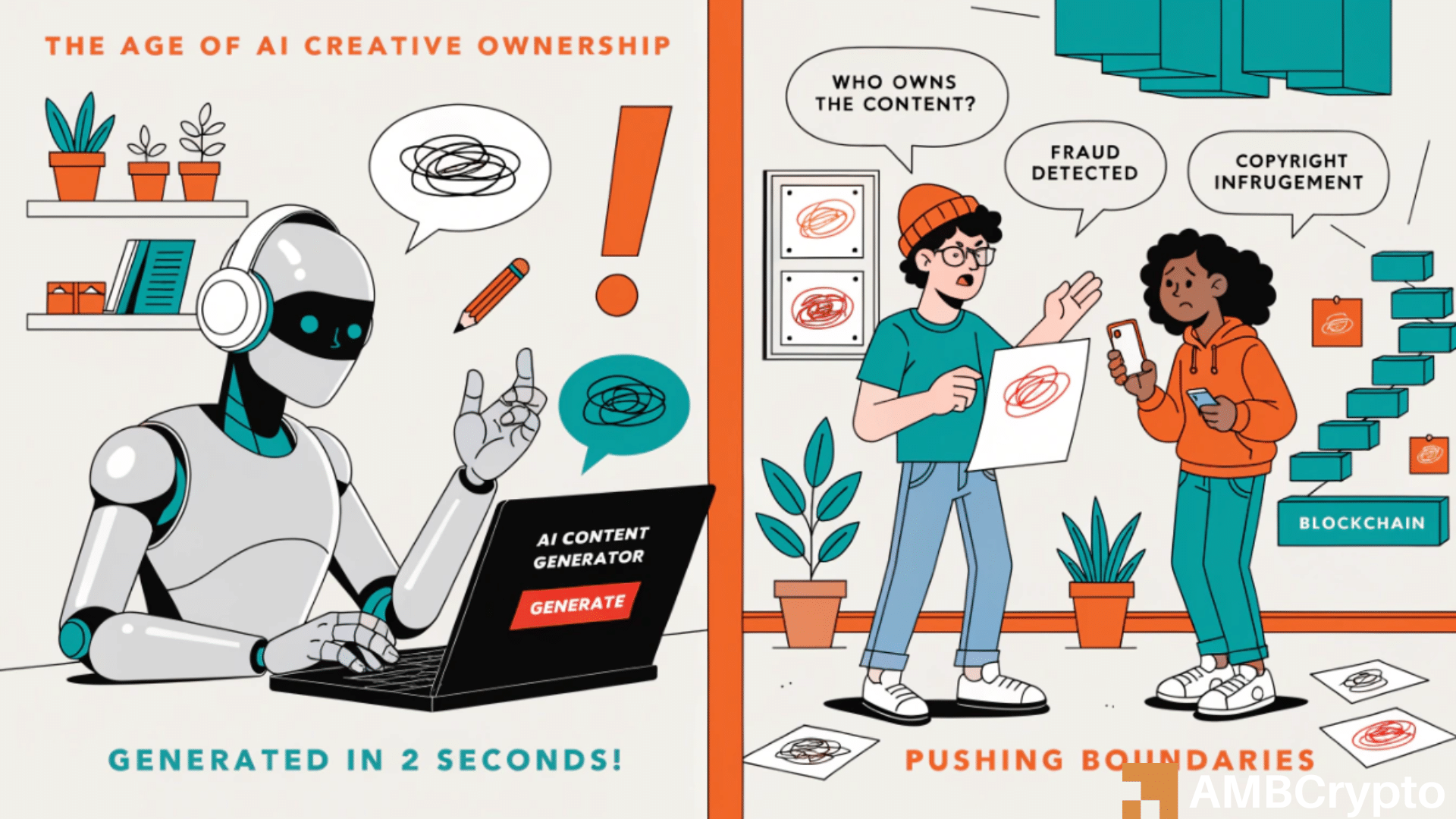
Camp Network, a blockchain startup focused on artificial intelligence [AI] and intellectual property [IP], is pitching crypto as a fix for growing problems in entertainment finance and digital ownership.
The pitch comes as AI speeds up content creation, while funding and rights systems lag.
Creators often face unclear ownership and complex financing. Camp Network’s approach, using blockchain-based “on-chain vaults”, tries to replace intermediaries with programmable ownership and automated revenue flows.
Funding without middlemen
In an interview with AltcoinDesk, Co-Founder Nirav Murthy said entertainment financing remains slow and controlled by a few players. Creators often give up equity and pay high legal costs to secure funding.
Camp’s model allows communities to fund projects directly. Fans can share in the upside of the IP they support. A recent example included a $200,000 vault used for film post-production and marketing.
Murthy said this model builds stronger audiences. Supporters become more engaged when they have economic exposure.
Tokenizing entertainment flows collapses the distance between creators, capital, and audiences.
The company said 53 global music festivals have joined the network, including Clockenflap and S2O Festival.
Industry response remains cautious. In an interview with IBM, a New York City-based record label said,
Royalty payments are often three to six months delayed. What happens if a song blows up and when the stats come in, not everyone was credited? At that point, changing the metadata is a pain and often swept under the rug.
Executives are open to blockchain only if it solves real inefficiencies such as cross-border payments, rights tracking and revenue distribution, rather than adding complexity.
AI exposes cracks in ownership
The pressure comes from AI’s rapid growth. Content is being created faster than ownership systems can track.
IP still gets priced after the fact… that model collapses once creation happens at AI speed.
Murthy said ownership must be tracked at the moment of creation. Delays can leave creators without payment or control.
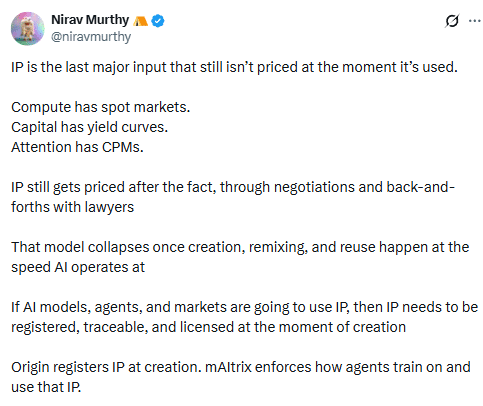
Camp Network’s system focuses on “proof of provenance,” which records who created content and how it is used. The goal is to allow creators to license work and receive royalties automatically.
The company describes this as building an “Autonomous IP Layer” for AI systems, where data used to train models is traceable and permissioned.
That approach aligns with broader industry concerns. According to a16z Crypto’s State of Crypto 2025 report, AI and blockchain are increasingly converging, with crypto infrastructure evolving into a core layer of the digital economy.
Capital flows into IP blockchains
Investors have backed this approach.
Camp Network has raised about $30 million across funding rounds. That includes a $25 million Series A led by 1kx and Blockchain Capital.
Murthy has also pointed to broader changes in the market, including how creators and platforms are reacting to AI.
If you’re a startup trying to train a voice model or a video model… you can’t do it anymore
At the same time, legal pressure is rising. Creators and publishers have filed lawsuits over AI training on copyrighted material.
Anyways, adoption remains uneven. Institutional investors still dominate early participation in tokenized assets. As AI creates more content, ownership may become harder to define.
Final Summary
- Creators still face slow financing, high legal costs, and loss of equity under traditional systems.
- Camp’s “on-chain vaults” enable direct funding from communities, allowing fans to share in IP revenue.
Go to Source to See Full Article
Author: Renuka Tahelyani