
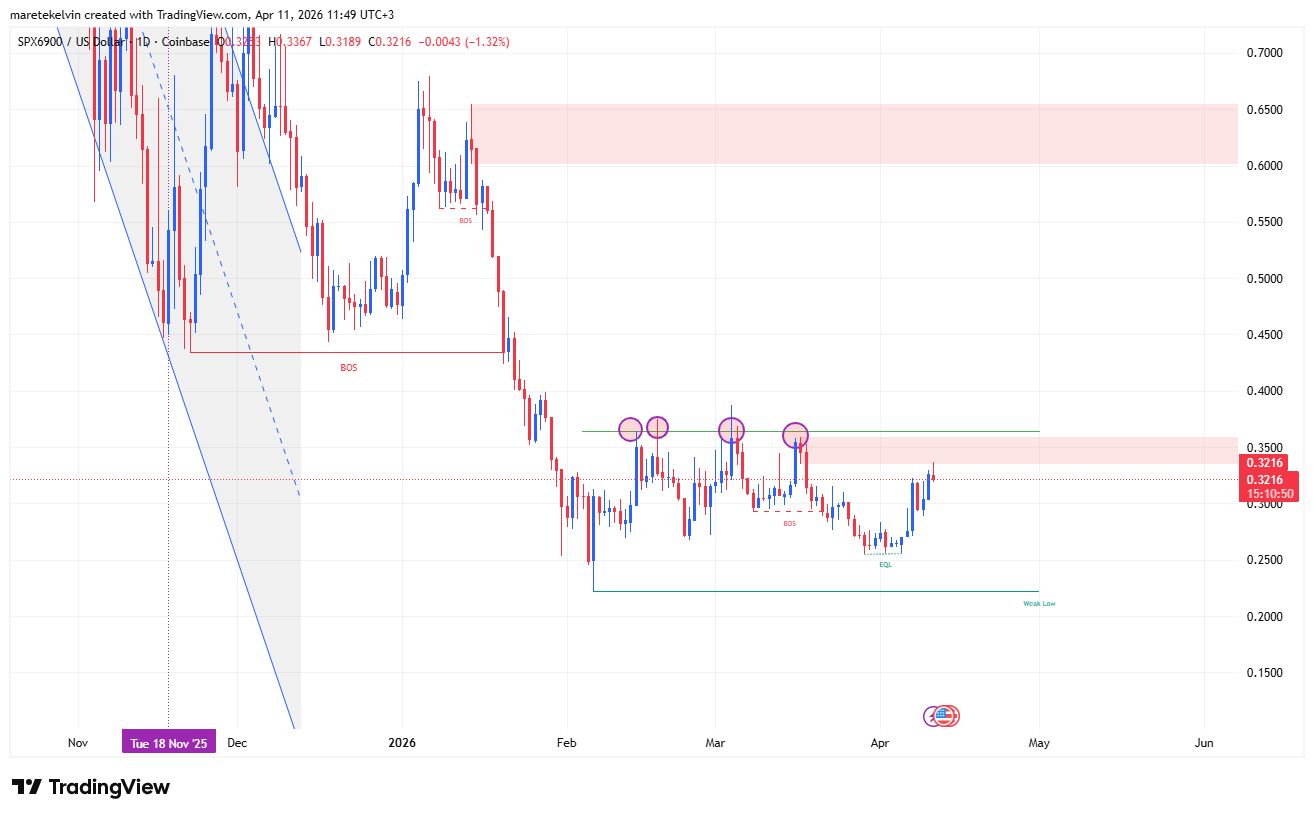
SPX price action spent the past two months moving within a defined range between $0.22 and $0.36. Prices respected both boundaries, showing clear phases of accumulation and distribution.
However, the tone has started to shift. A fresh bullish move pushed the price back toward the upper range near $0.36.
Can SPX break above $0.36?
As the price approached this level, it tested a supply zone that capped several previous breakouts. This was not the first time SPX6900 [SPX] reached this area, but the context appeared different.
That move aligned with rising trading activity, suggesting buyers were attempting to invalidate resistance.
What is supporting the bullish push?
One key change was the surge in Spot Volume.
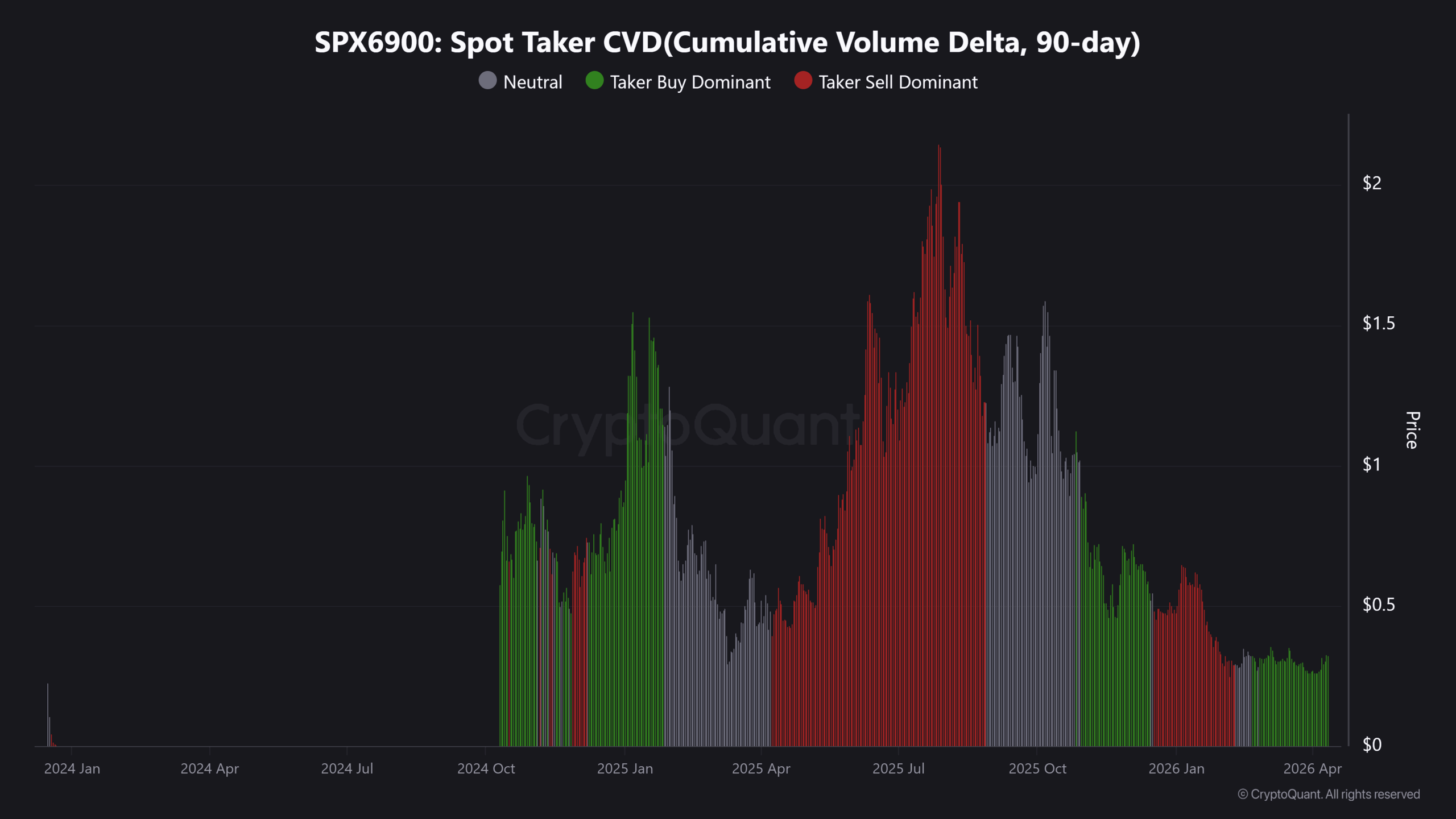
Spot Volume rose 12.75% to 8.20 million over the past 24 hours. Rising volume at resistance often signals intent, showing active participation from the market.
In this case, buyers appeared to be leading the move.

On top of that, whale activity tilted toward accumulation. Larger holders built positions instead of exiting.
This behavior added weight to the bullish case, especially as buyers dominated Spot markets at press time. That shift set up a scenario where sustained pressure could build instead of a quick rejection.
Breakout or another rejection?
Even with all these positive signs, the upper boundary still remains a vital hurdle. Should buyers not be able to overcome this, SPX might find itself rebounding back within the range and extending its consolidation period.
But if the current pressure holds, the chances of a breakout increase. A clean move above $0.36 would shift the structure and open the door for a new trend.
All in all, SPX is at a decisive point. After weeks of consolidation, the price is pressing against resistance with stronger backing from the rising spot volume and whale activity.
Whether this results in a breakout or another rejection will define the next phase. For now, the balance is slowly tilting in favor of the bulls.
Final Summary
- SPX stayed range-bound between $0.22 and $0.36 for two months, showing clear accumulation and distribution phases.
- Whale activity shifted toward accumulation, showing larger players were building positions instead of exiting.
Go to Source to See Full Article
Author: Kelvin Murithi