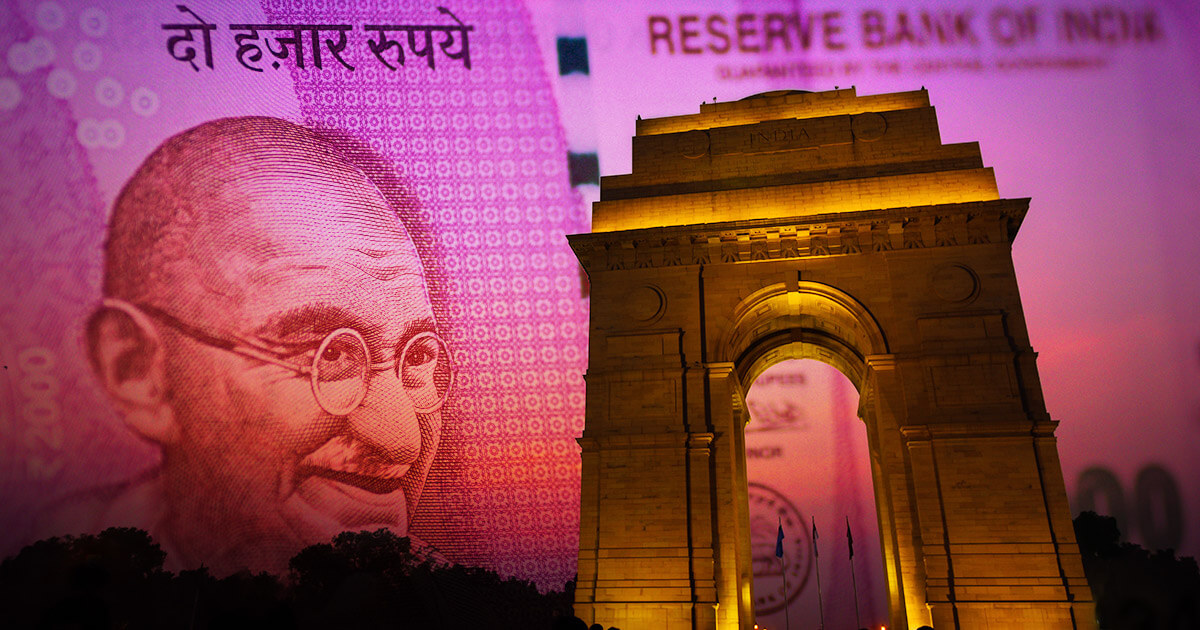
The Reserve Bank of India (RBI) is adopting a cautious approach to the nationwide rollout of its Central Bank Digital Currency (CBDC), the e-rupee, prioritizing financial stability and a thorough understanding of its potential impacts.
Deputy Governor T. Rabi Sankar emphasized that the bank is “in no hurry to roll it out immediately,” indicating a deliberate strategy to assess outcomes before broader implementation, Bloomberg News reported on Nov. 20.
Evaluating long-term impact
The e-rupee pilot, launched in December 2022, has made steady but modest progress, amassing over 5 million users and facilitating roughly 1 million retail transactions by mid-2024. Despite these numbers, Sankar highlighted the importance of evaluating the long-term impact before scaling up.
He said during a conference in Cebu, Philippines:
“Once we have clarity on the outcomes and potential effects, we will take the next steps.”
The Reserve Bank’s deliberate approach reflects concerns about how CBDCs could disrupt traditional banking. Deputy Governor Michael Debabrata Patra previously noted that CBDCs might attract depositors during financial instability, posing risks to banks by encouraging mass withdrawals.
To mitigate such challenges, the central bank has limited its CBDC rollout to controlled experiments. Local banks participating in the pilot, such as ICICI Bank and State Bank of India, have introduced incentives like salary disbursements via e-rupee to encourage adoption.
Despite the reservations, regulators in the country have previously stated that they prefer a nationwide CBDC over private digital currencies like Bitcoin.
Evolving features
India is also enhancing the e-rupee’s functionality, including developing offline transfer capabilities to boost accessibility. Governor Shaktikanta Das acknowledged, however, that adoption remains far from the levels achieved by the Unified Payments Interface (UPI), India’s leading digit
Go to Source to See Full Article
Author: Assad Jafri