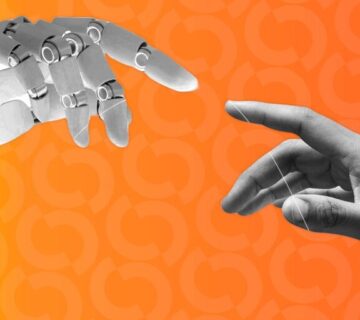
Google researchers have discovered a new technique that could finally make quantum computing practical in real life, using artificial intelligence to solve one of science’s most persistent challenges: more stable states.
In a research paper published in Nature, Google Deepmind scientists explain that their new AI system, AlphaQubit, has proven remarkably successful at correcting the persistent errors that have long plagued quantum computers.
“Quantum computers have the potential to revolutionize drug discovery, material design, and fundamental physics—that is, if we can get them to work reliably,” Google’s announcement reads. But nothing is perfect: quantum systems are extraordinarily fragile. Even the slightest environmental interference—from heat, vibration, electromagnetic fields, or even cosmic rays—can disrupt their delicate quantum states, leading to errors that make computations unreliable.
A March research paper highlights the challenge: quantum computers need an error rate of just one in a trillion operations (10^-12) for practical use. However, current hardware has error rates between 10^-3 and 10^-2 per operation, making error correction crucial.
“Certain problems, which would take a conven
Go to Source to See Full Article
Author: Jose Antonio Lanz