Key Takeaways
How is Ethereum responding to the global liquidity expansion?
Exchange reserves continue to decline as liquidity growth strengthens, signaling increased accumulation and reduced selling pressure.
What signals are emerging from derivatives data?
Cooling sentiment, steady engagement, and rising short liquidations reflect cautious optimism and strengthening bullish positioning.
Ethereum’s [ETH] liquidity landscape has begun shifting rapidly, as exchange reserves continue to decline while global M2 expansion accelerates.
The latest data shows exchange balances have dropped to nearly 16.1 million ETH, signaling intensified accumulation by long-term holders.
This decline mirrors a growing phase of self-custody activity as investors reposition for higher valuations.
Additionally, the strengthening correlation between ETH performance and M2 expansion hints at Ethereum catching up with Bitcoin’s liquidity-led gains.
Consequently, the network appears ready to transition from laggard behavior to a leadership phase in the next liquidity cycle.
Are long-term holders silently building Ethereum’s next bull leg?
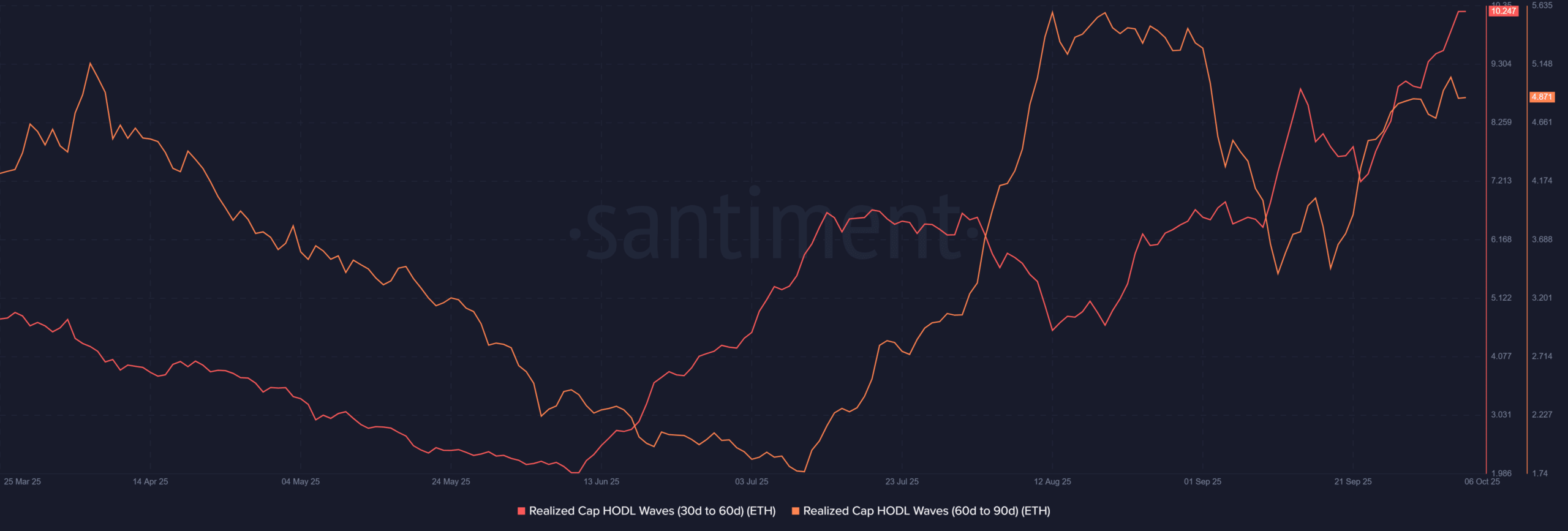
Santiment’s Realized Cap HODL Waves show a sharp rise in mid-term holder activity.
The 60–90-day wave surged from 1.9% in mid-June to 10.24% by the 6th of October, while the 30–60-day wave climbed from 1.7% to 4.87% in the same period.
This crossover indicates investors are holding ETH longer, reflecting rising conviction and reduced short-term profit-taking. Historically, such expansions in longer HODL bands have preceded major rallies.
The shift mirrors similar structures seen before Ethereum’s 2020 and 2021 bull runs, suggesting mid-term holders are quietly laying the foundation for another liquidity-driven breakout.