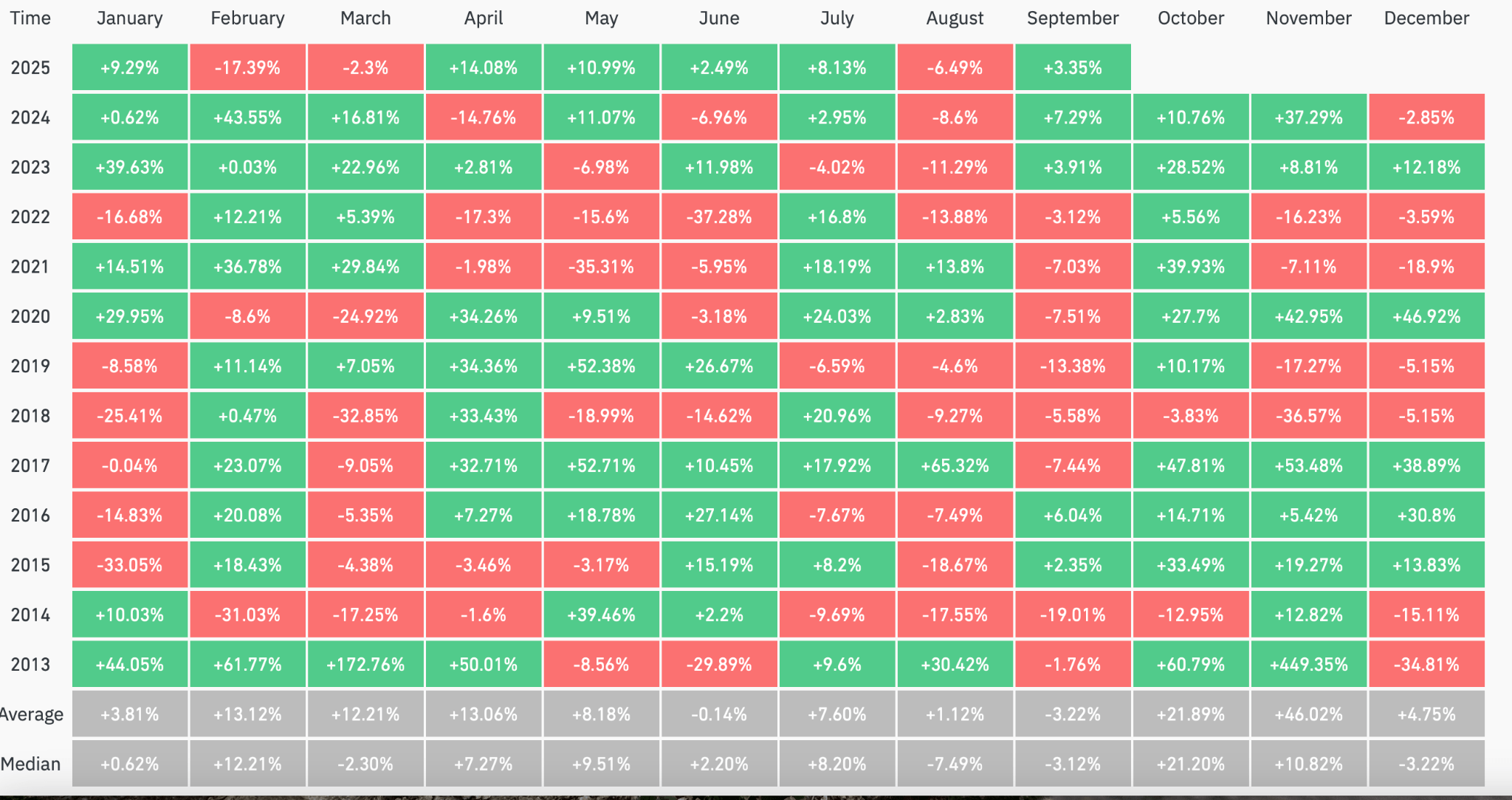
Bitcoin faces its weakest month, but history shows Q4 often brings recovery. The question is whether September’s drag will again set the stage.
Summary
- September is historically Bitcoin’s weakest month, but Q4 has often reversed losses, with October and November delivering some of the strongest rallies on record.
- Bitcoin trades near $111,000 after a 10% pullback, while Ethereum consolidates around $4,350. Institutional inflows above $55B and stablecoin reserves near $300B support sentiment.
- The Fed is expected to cut rates in September, inflation hovers near 2.6–2.7%, and the dollar’s 11% slide boosts global risk appetite.
- Tariffs on imports and semiconductors raise costs for miners and manufacturers, complicating inflation control and adding pressure on global supply chains feeding into crypto markets.
- SEC and CFTC guidance could allow spot crypto trading on U.S. exchanges. Combined with PlanB’s model, liquidity growth supports long-term adoption, but risks remain.
Table of Contents
History shows September as Bitcoin’s weakest month
Markets often move in patterns, and crypto has shown a seasonal rhythm that resembles what has long been observed in equities. This rhythm is especially visible when looking at how certain months tend to behave year after year.
According to CoinGlass data, average returns in August hover around 1%, while median performance trends closer to a 7% loss.
Sharp setbacks in August include a decline of more than 19% in 2015 and nearly 14% in 2022. Even in bullish periods, such as 2020, Bitcoin (BTC) added less than 3%, pointing to how August often cools momentum rather than extends it.
Meanwhile, September has been even more challenging. It is the only month where bot
Go to Source to See Full Article
Author: Ankish Jain