
Bitcoin [BTC] Supply on Exchanges has continued to fall lately, reinforcing a broader structural shift towards long-term holding.
In fact, according to Santiment, only about 5.8% of Bitcoin’s total supply remains on exchanges right now – The lowest level since November 2017 when BTC was valued at close to $16,400.
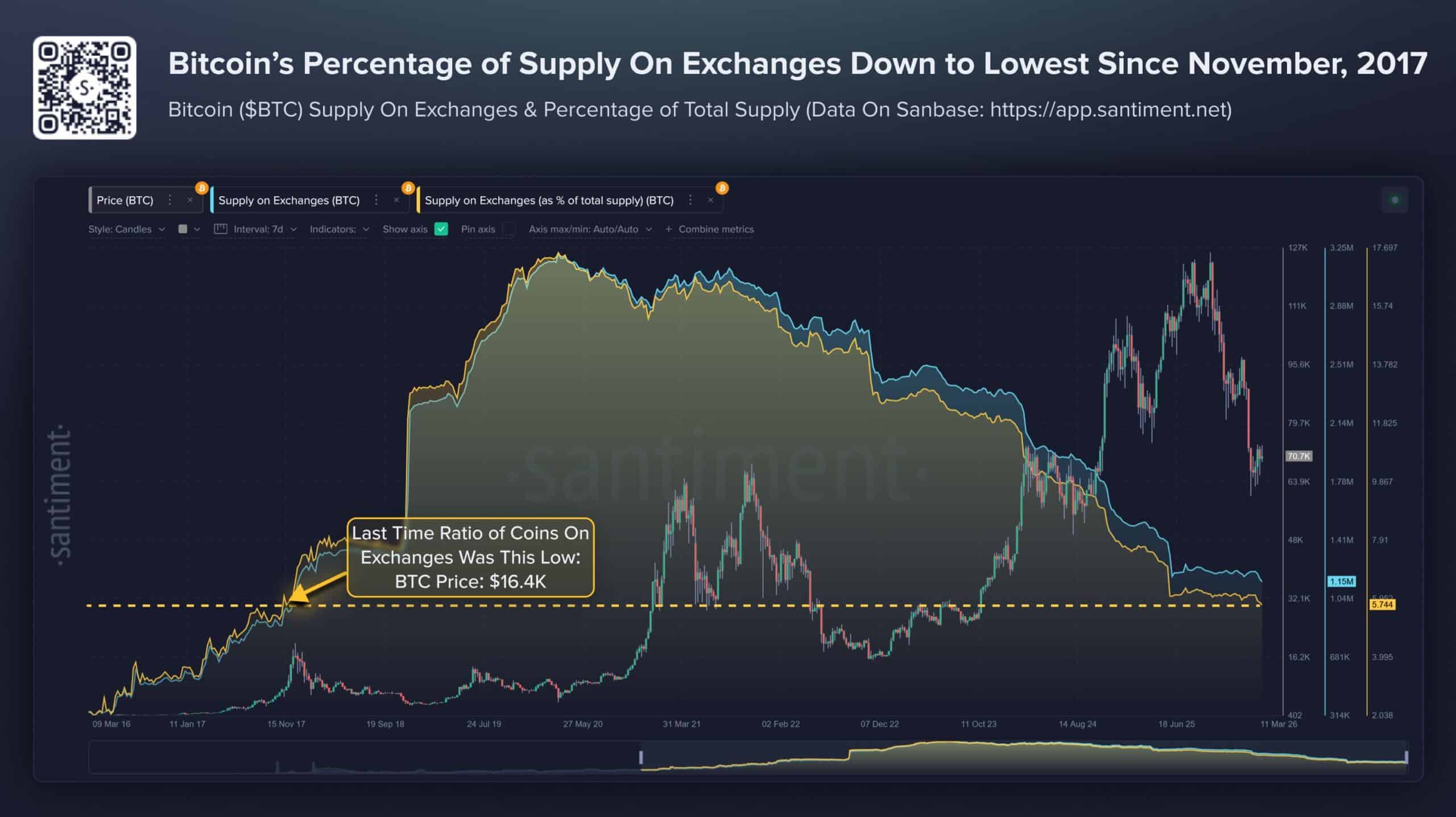
Earlier in the cycle, exchange balances exceeded 3 million BTC around 2018, reflecting higher trading liquidity and more frequent market rotation. As time progressed, however, reserves gradually trended south as investors increasingly moved coins into self-custody.
Meanwhile, Bitcoin advanced through multiple market cycles, including the rally that pushed prices towards $69,000 in 2021.
At the same time, exchange balances continued to fall, with the same currently sitting at 2.43 million BTC. Such a steady contraction is symbolic of a tightening liquid supply environment.
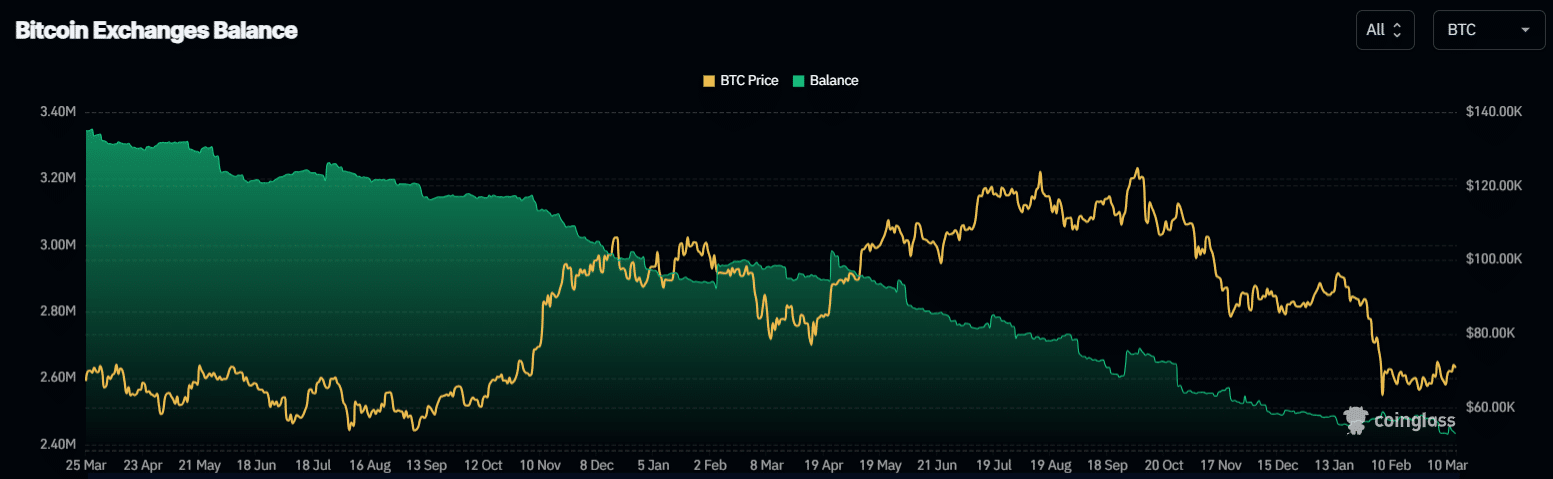
In that context, fewer coins remain readily available for immediate selling. All while the migration towards cold storage signals stronger holder conviction and a market increasingly shaped by long-term accumulation dynamics.
Institutional capital deepens Bitcoin’s supply compression
Bitcoin’s declining exchange supply has already signaled tightening liquidity. Institutional flows simply deepen that trend though. In fact, since January 2024, Spot Bitcoin ETFs have attracted approximately $56 billion in cumulative inflows, according to Farside data.
With Bitcoin trading near $71,000 at press time, even modest inflows remove hundreds of BTC from circulation. Daily demand often surpasses the fixed 450 BTC miner issuance, steadily tightening available supply.
According to CryptoQuant, ETF custodians now hold about 1.3 million BTC, roughly 6.7% of the circulating supply – Underscoring sustained institutional accumulation.
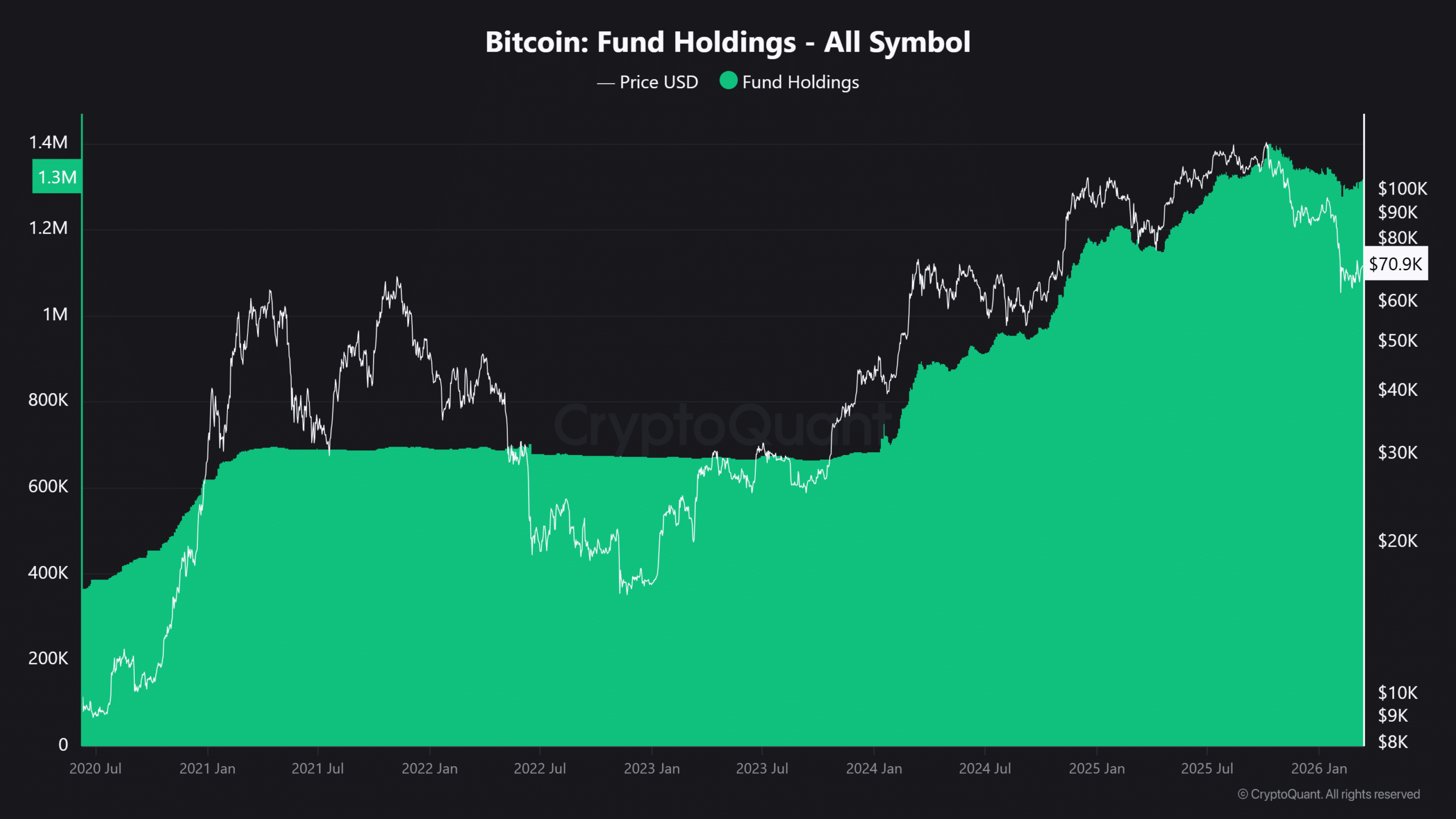
On-chain behavior seemed to be complementing this trend too.
Long-Term Holder supply stands near 14.43 million BTC, close to cycle highs, while dormant bands from six to twelve months have continued to expand. Such conviction historically compresses liquid inventory, creating scarcity conditions that often precede strong Bitcoin rallies.
Shrinking float raises Bitcoin’s price sensitivity
Tightening exchange supply and steady ETF demand have already reduced available Bitcoin liquidity, and order-book dynamics now reflect that shift. Kaiko data revealed 1% market depth, with BTC hitting record highs across major venues. U.S exchanges such as Coinbase and Kraken dominate this liquidity expansion. Bid and ask liquidity within the 0.1–1% range has steadily increased too.
Even so, thinner spot supply raises price sensitivity as large buy orders now move markets more easily. Reduced exchange balances mean fewer coins absorb aggressive demand. At the same time, post-halving issuance remains capped near 450 BTC per day.
Also, according to CryptoQuant, the Miners’ Position Index had a reading of –0.93 at press time – Evidence of restrained selling pressure.
ETF inflows have continued to absorb both new issuance and circulating supply so far. In such a setting, compressed liquidity and steady institutional accumulation could gradually create conditions that historically precede accelerated Bitcoin price rallies.
Final Summary
- Bitcoin [BTC] exchange reserves falling to 2.43 million BTC while ETFs hold 1.3 million BTC highlights a tightening liquid supply that increasingly favors long-term accumulation dynamics.
- Bitcoin demand from Spot ETFs absorbing 450 BTC daily issuance alongside restrained miner selling raises price sensitivity, strengthening conditions for supply-driven rallies.
Go to Source to See Full Article
Author: Muriuki Lazaro