
Macro conditions are shaping the crypto market movement.
First, ceasefire news on the 7th of April reduced fears linked to the Strait of Hormuz, which carries about 20% of global cargo flows. As oil fell below $100 and risk appetite improved, Bitcoin [BTC] moved above $72,200 while Ethereum [ETH] rose past $2,250, both reaching three-week highs.
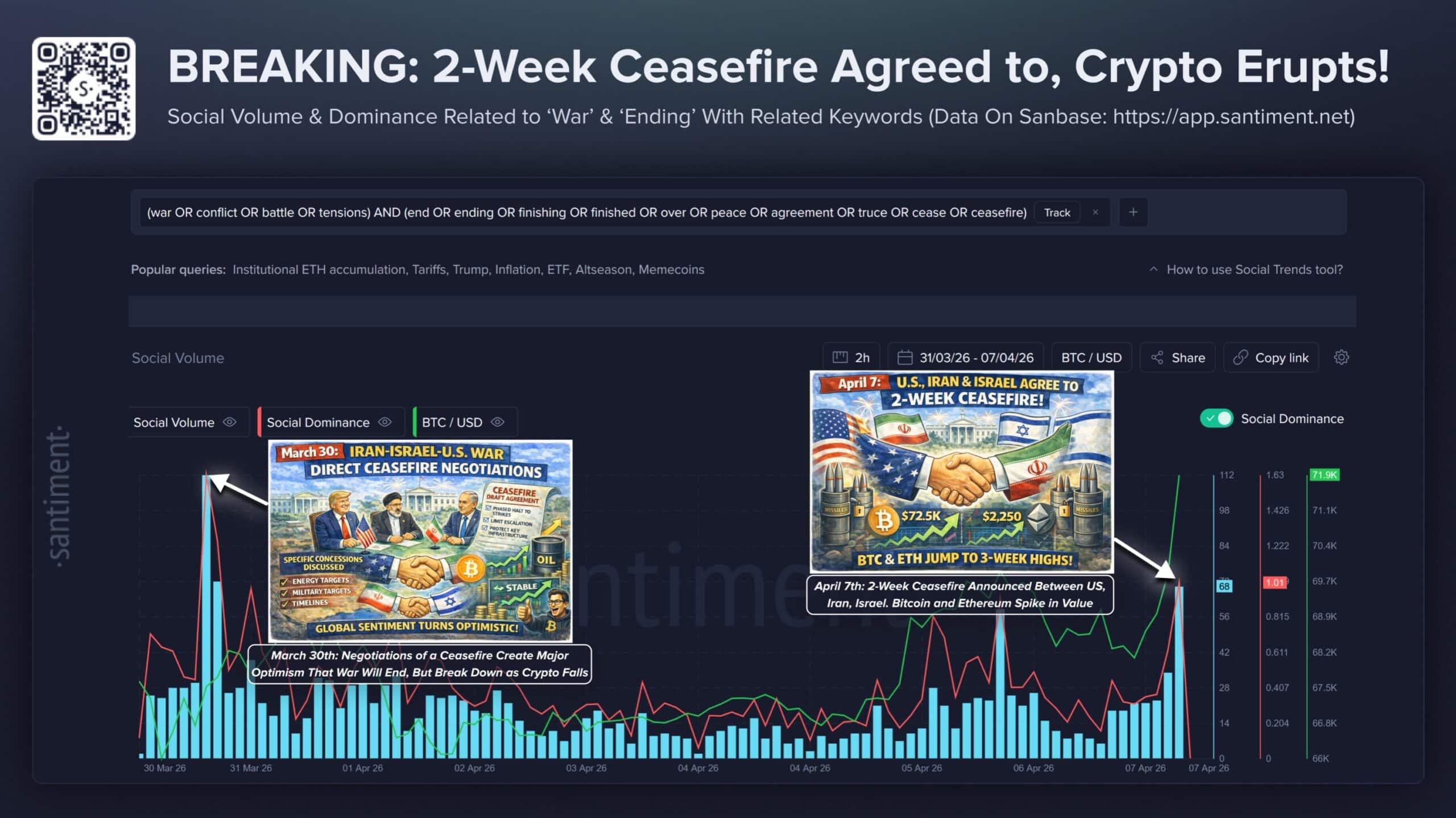
At the same time, social dominance crossed 1%, with volume rising toward 68, showing growing focus on the “war ending” narrative. Earlier, a spike on the 30th of March showed similar optimism, yet price later weakened as talks failed, which exposed how fragile sentiment can be.
However, the latest move shows stronger alignment between sentiment and price, suggesting macro relief is supporting demand. Still, this strength may not hold, as any setback in negotiations could reverse flows and pressure prices again.
Institutions drain exchange liquidity
Liquidity shifts frequently precede price movements. Binance held more than 90% of the market in early 2022, while Bitcoin traded between $40,000 and $50,000, indicating strong retail participation. By 2023, mounting macroeconomic pressures had reduced Binance’s dominance, and Bitcoin had fallen to $20,000, indicating retail exhaustion and the start of capital rotation.
At the same time, larger players began absorbing liquidity via OTC desks, which reduced visible exchange activity. Institutions prefer OTC trading to avoid slippage and volatility in uncertain markets, especially as oil prices rose above $114 and risk sentiment weakened.
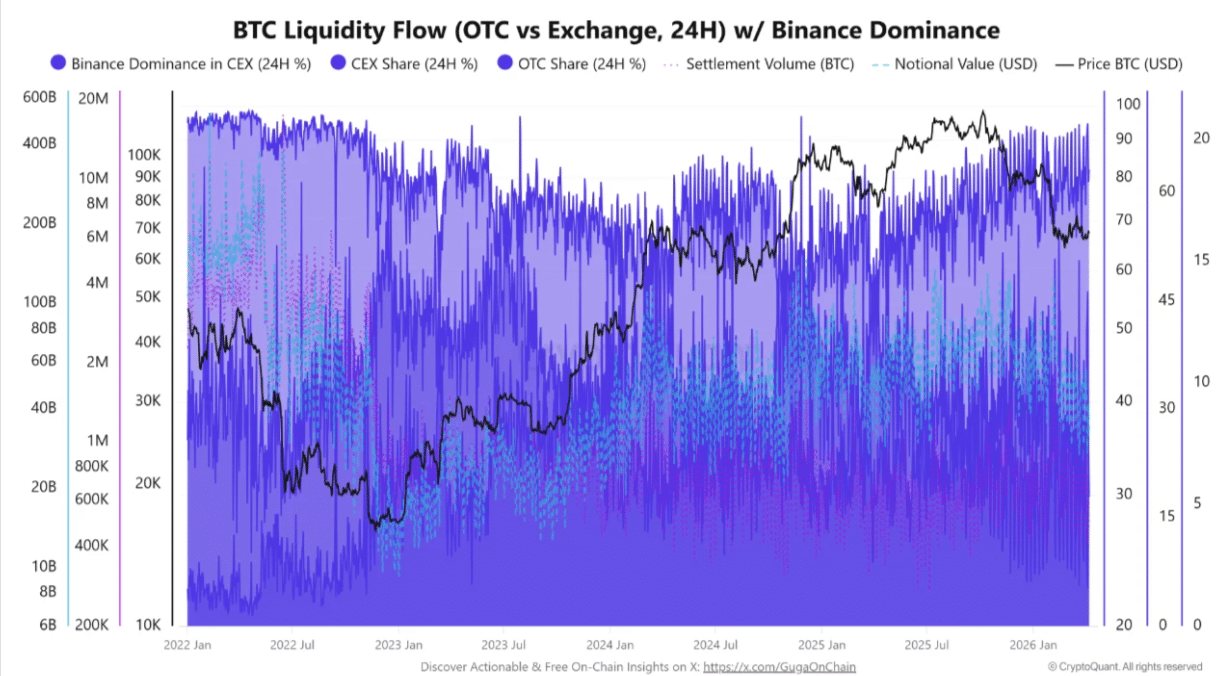
Moving forward, price recovered toward $90,000 in 2024–2025, yet Binance dominance stayed compressed between 20% and 40%, showing retail did not return at the same pace. At press time, dominance dropped further, while 82% of $32.7 billion in flows moved off-exchange, reinforcing institutional control.
Still, this shift cuts both ways, as reduced retail participation limits liquidity depth, yet stronger hands stabilize price. In turn, Bitcoin’s structure looks firmer, although it depends more on concentrated capital than broad market participation.
Go to Source to See Full Article
Author: Muriuki Lazaro