
Quantum computing has made some progress, but not to the extent that it could pose a threat to the Bitcoin network and related wallets.
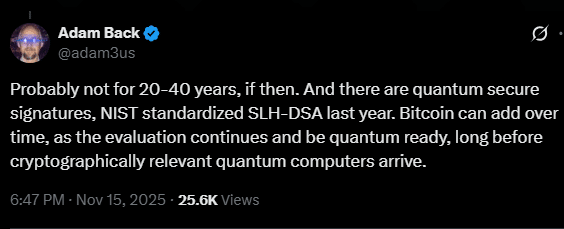
According to Adam Back, CEO of Blockstream and a cypherpunk who was once mistaken for Satoshi, quantum computers right now can’t crash BTC.
He discredited a post that claimed that the only thing that could crash BTC by 99% from $87k to $3 is a quantum computer capable of cracking wallets and the entire network.
Last month, Back said that quantum computers could only become stable and pose a threat to BTC in the next 20-40 years.
Source: X
Still, the network could be secure by the time the risk becomes real. In fact, Blockstream researchers are already developing proposals for upgrading the Bitcoin network to a quantum-secure one.
However, not everyone believes the threat is two decades away.
Why quantum-secure BTC is urgent
Perhaps one of the most vocal investors about the risks of quantum computing is Charles Edwards, CEO of Capriole Investments. According to him, BTC has lagged behind gold in terms of price performance this year because of the risk.
The best solution, he added, is to reach a consensus in 2026 and make the Bitcoin network quantum-resistant.

Source: X
For perspective, quantum computers differ from current classical computers because they utilize the so-called qubits instead of typical solid-state chips that operate on 0 and 1. However, they are currently difficult to create, scale, and shield from errors (such as overheating).
So far, IBM has a working prototype with about 1000 qubits, while Google and Microsoft have managed 50 and 8 qubits, respectively. Alas, the error rates have been extremely high.
To crack the current Bitcoin cryptography, a quantum computer must have at least 2,500 logical and stable qubits that can operate for days without errors. That’s why experts like Adam Back view the threat as a long-term issue, rather than an immediate or mid-term risk.
Bitcoin holders seek relative security
In fact, most of the top firms that are pushing for quantum computers will be at risk if they develop one without proper safeguards. Based on this premise, even Strategy founder Michael Saylor has downplayed the mid-term threats posed by quantum computers to Bitcoin.
“Google and Microsoft won’t sell you a quantum computer that cracks modern cryptography because it’ll destroy them, the US government, and the banking system.”
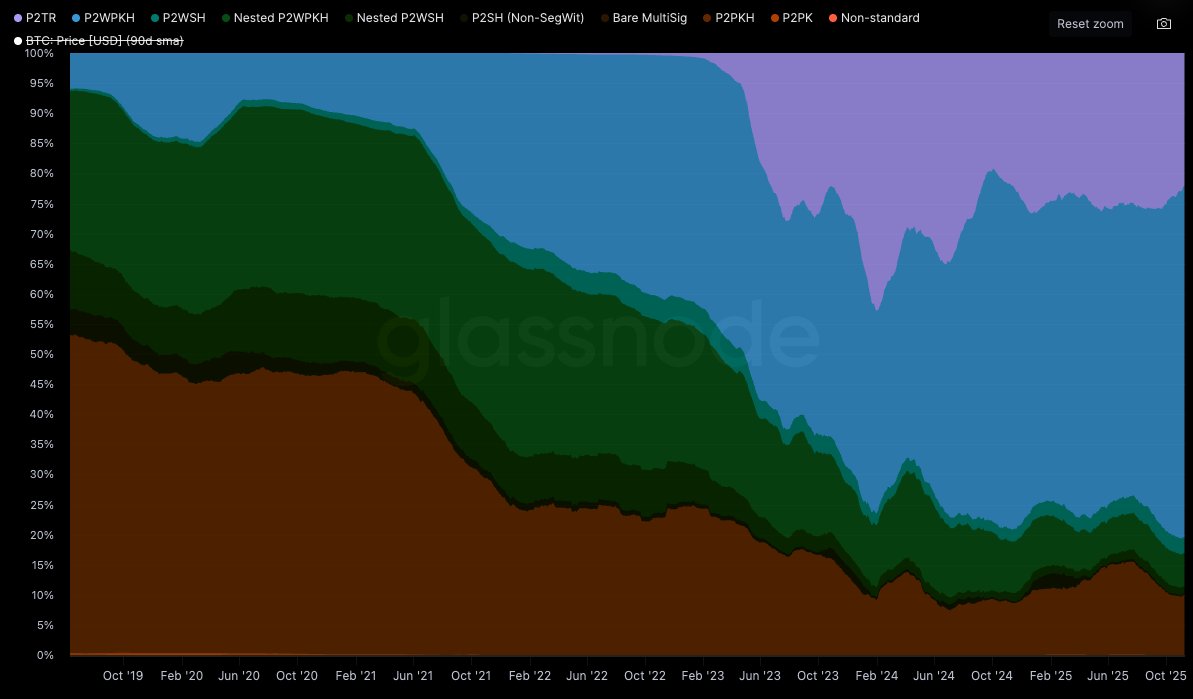
In the meantime, some top holders are already migrating to more resistant Bitcoin addresses (Segwit, blue) from the latest format (taproot, purple).
According to BTC analyst Willy Woo, Segwit reduces “quantum long range attacks” if the address is not reused.
The number of Segwit addresses has been increasing since 2024.
Source: Glassnode
Final Thoughts
- Cryptography experts believe that it could take decades for quantum computers to crack the Bitcoin network.
- Some investors have already migrated to relatively secure Segwit addresses.
Go to Source to See Full Article
Author: Benjamin Njiri