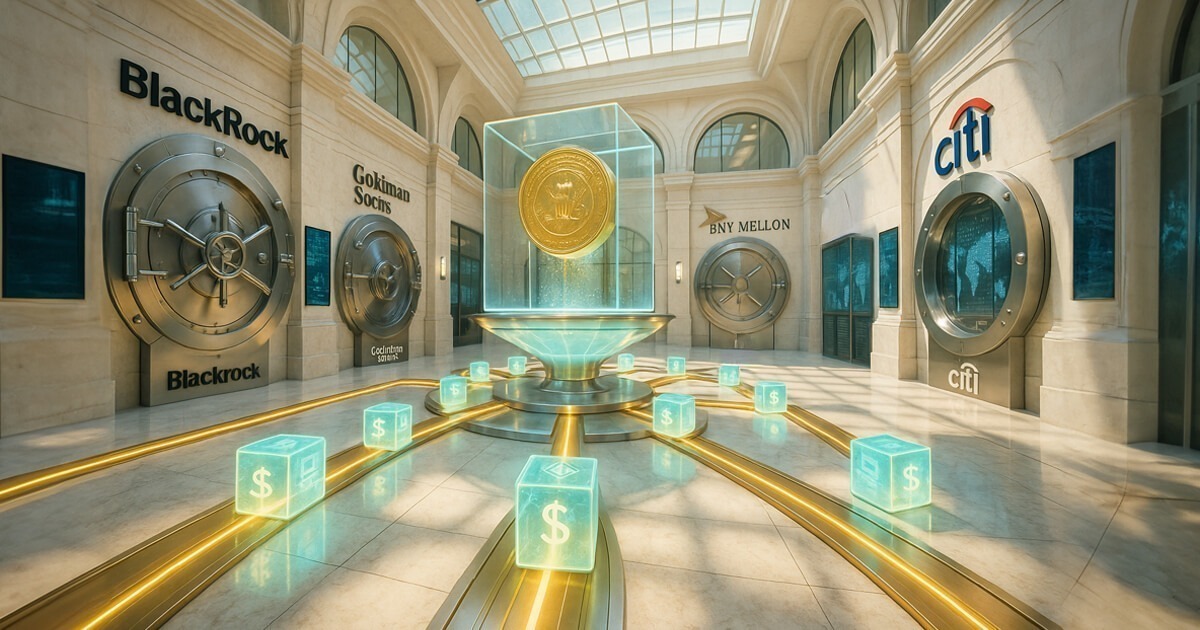
Wall Street’s biggest balance sheets are quietly rebuilding the crypto stack under the banner of tokenization and custody.
What began as a defensive stance toward digital assets is turning into an infrastructure shift: bringing fund administration, cash management, and settlement onto blockchain rails that look more like BNY Mellon’s LiquidityDirect platform than a typical crypto exchange.
Since late summer, Goldman Sachs and BNY Mellon have taken tokenized money market funds live, Citi has positioned itself as a tokenization agent and custodian on Switzerland’s SDX exchange, and BlackRock has doubled down on the thesis that tokenized funds will eventually sit beside ETFs as a core product line.
In the span of a few months, tokenized treasuries have become an $8.3 billion asset class. Broader real-world assets (RWAs) now range between $24 and $30 billion. Yet the real contest isn’t in the numbers; it’s in who will custody the next $100 billion of digital paper and how those assets connect to traditional balance sheets.
The first wave of bank entries shows a clear pattern. Goldman and BNY chose the least volatile and most systemically relevant asset they could: money market funds.
Money market funds are among the safest and most liquid investment vehicles in traditional finance. They hold short-term government and corporate debt, giving institutions a way to park cash while earning modest yields with minimal risk. Tokenizing them turns those holdings into digital units that can be transferred instantly and settled 24 hours a day.
For large institutions, the benefit is not speculative but operational: corporate treasurers can move cash faster, pledge assets as collateral, and reduce the frictions that come with banking cut-off times.
Citi’s strategy moves in parallel through private markets. By joining SDX, Citi now
Go to Source to See Full Article
Author: Andjela Radmilac